



Choosing a tattoo style is one of the most important decisions you’ll make before getting tattooed. Two of the most popular — and very different — options are fine line tattoos and traditional tattoos. While both are timeless in their own way, they differ significantly in appearance, technique, longevity, and overall vibe.
If you’re deciding between fine line vs traditional tattoo styles, this guide breaks down the key differences so you can choose the option that best fits your vision, lifestyle, and long-term expectations.
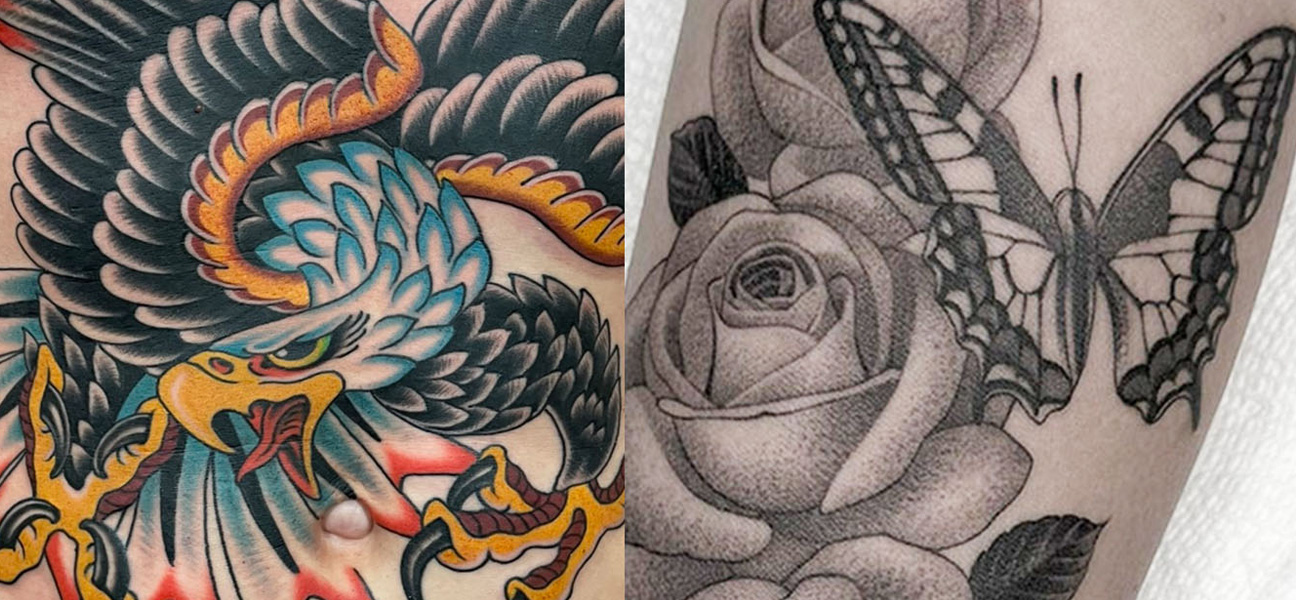
Fine line tattoos are known for their delicate, thin lines and minimal shading. They often feature subtle details, negative space, and a lighter overall appearance. This style is commonly used for minimalist designs, script, florals, and intricate illustrations.
Because of the precision required, fine line tattoos rely heavily on artist skill and technique. They are often created using a single needle or tight needle grouping to achieve crisp, refined lines.
Learn more about fine line tattoos on our service page to see examples and explore whether this style fits your idea.
Traditional tattoos (sometimes called American traditional) are bold, iconic, and instantly recognizable. This style is defined by thick black outlines, solid color fills, and classic imagery like roses, daggers, animals, and nautical symbols.
Traditional tattoos are designed to stand the test of time. The heavier lines and saturated ink help ensure the tattoo remains legible and visually strong as it ages.
You can explore examples of traditional tattoos on our service page to see how this style comes to life.
Fine line tattoos are subtle and understated, while traditional tattoos are bold and eye-catching. If you want something soft and minimalist, fine line may be the better fit. If you want a tattoo that makes a statement from across the room, traditional delivers that impact.
This is one of the most common questions people ask.
Neither style is “bad” long-term — they simply age differently.
Fine line tattoos excel at intricate detail and subtle imagery. Traditional tattoos prioritize clarity and readability over fine detail, which is why they remain recognizable even decades later.
Pain levels vary by placement and individual tolerance, but:
Healing time is similar for both when done properly.
Ask yourself:
There’s no wrong answer — the best tattoo style is the one that aligns with your personal taste and how you want the tattoo to live on your body over time.
Yes — and many custom tattoos do. Some designs blend delicate line work with bold outlines or incorporate traditional structure with modern fine line detail. A custom consultation is the best way to explore how different styles can work together for your idea.
When comparing fine line vs traditional tattoo styles, the decision comes down to aesthetic preference, longevity goals, and personal expression. Both styles are timeless when executed well, and both can produce incredible, meaningful tattoos.
If you’re still unsure, a consultation with a professional tattoo artist can help refine your idea and recommend the best approach for your design, placement, and skin.
Ready to take the next step? Visit our booking page to schedule a consultation and talk through your tattoo idea with an experienced artist.


